
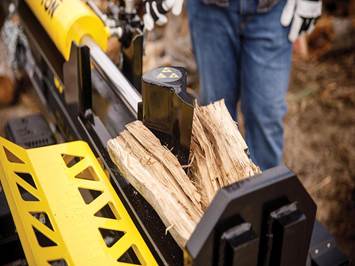
https://www.homedepot.com/c/ab/best-log-splitters/9ba683603be9fa5395fab901a1a05f20
Published June 25, 2025
Best Log Splitters
When you’re in the market for a quality log splitter, it’s important to choose the right product for the job. This buying guide explains how to select the best log splitter, including key features, specifications and considerations for a variety of wood splitting needs.
What Is a Log Splitter?
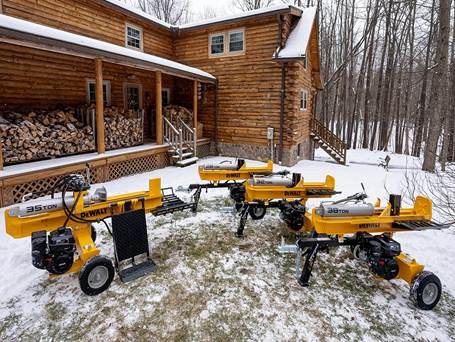
Log splitters are machines that cut along the length of logs, splitting them into long, wedge-shaped pieces of wood. While you could split wood manually using an axe, log splitters make the task safer. Cuts are more precise, and it takes a lot less time to use log splitters. As a bonus, you won’t have to work as hard or use as much strength as you’d need to wield an axe.
Log splitters are a fantastic tool for preparing firewood. Fireplaces, wood-burning stoves and outdoor heating options all require wood. The pieces burn better when they’re the right size, and split wood tends to burn better than whole logs. The uniformly cut pieces are easy to stack as well.
Log splitters are either hydraulic, kinetic or manual. Both hydraulic and kinetic machines can be electric or gas powered. At their most basic levels, they work by pushing a sharp wedge and a log together so that the wedge splits the wood into two pieces.
Hydraulic Log Splitters
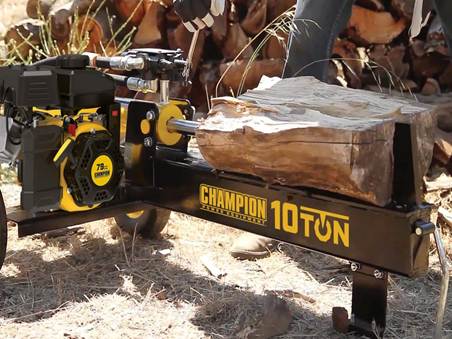
Hydraulic log splitters are the most common machines available. But what are hydraulics? In simplest terms, hydraulic systems use liquid under pressure.
In hydraulic log splitters, for instance, the pressurized liquid is usually oil. The machine is a system with a cylinder attached to a pump, and they work together to operate the machine.
When you insert a log and then activate the motor, the machine pushes a ram with a sharp edged wedge up against the log. It’s similar to a plunger in a pinball machine, but it’s much slower and stronger, and the plunger has the a sharp end like an axe.
The wedge is then pushed further, all the way into and through the log, splitting it into two pieces as it goes through. The hydraulic pressure is what gives the sharp wedge of the log splitter a slow, steady push to complete the cut.
- Hydraulic log splitters can be gas, electric or even manual, but gas-powered ones are more common.
- Logs can be loaded either horizontally or vertically, and some combination models allow both orientations.
Kinetic Log Splitters
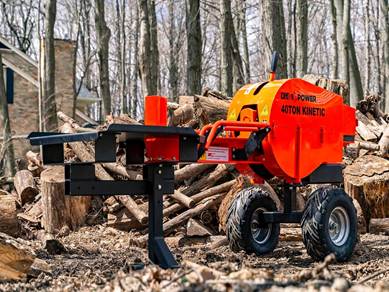
Kinetic log splitters aren’t as common as hydraulic ones. They operate using a flywheel to power the splitting action in the machine. Once activated, the flywheel creates stored, kinetic energy. With a quick burst of the stored energy, a ram forcefully pushes against one end of the log. The log then quickly contacts a sharp wedge at the other end, splitting the log in one motion.
Kinetic log splitters can be powered by electricity or gas, but electric-powered models are more common. Most require horizontal placement of the logs, but vertical models exist.
Key features make kinetic log splitters differ from hydraulic ones:
- Generally the fastest wood splitters, with speeds as quick as three seconds per cycle.
- Lower maintenance since there are no hydraulics and liquids.
- Softwoods and green woods may need more than one cycle to split properly.
Vertical Vs. Horizontal
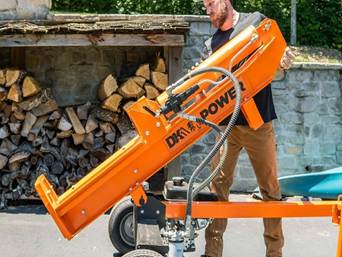
Some of the best log splitters can be used vertically or horizontally. Some combination hydraulic splitters can be used both ways, while others are dedicated to either horizontal or vertical loading. Most kinetic log splitters are horizontal only, but a few models do offer vertical placement.
- Vertical log splitters are often better for larger logs. They are usually bigger and more powerful, and you don’t have to lift heavy logs to place them in the machine.
- Horizontal log splitters are better for lighter woods that are easier to split and easier to pick up to load into the machine.
Gas Vs. Electric
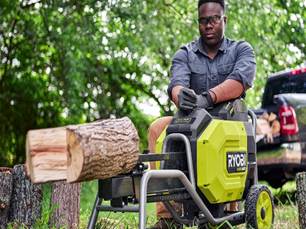
Hydraulic and kinetic log splitters both can be powered by either gas or electricity. Most kinetic log splitters use electricity-powered motors, while typically, the best gas log splitters are hydraulic.
Consider these key characteristics when deciding between them.
Gas log splitter benefits:
- More tonnage/power than most electrically powered splitters
- Many are combination hydraulic splitters, so logs can be split vertically or horizontally
- Don’t require a nearby outlet
Gas log splitter drawbacks:
- Louder operation than the best electric log splitters
- More fumes
- Needs more maintenance
- Larger and needs more space to store
Electric log splitter benefits:
- Quieter operation
- Less maintenance
- Lighter weight
- Easier storage and portability
Electric log splitter drawbacks:
- An outlet is needed for power
- Some models can’t use outlets found in most homes
- These models are often less powerful than gas log splitters
Manual Log Splitters
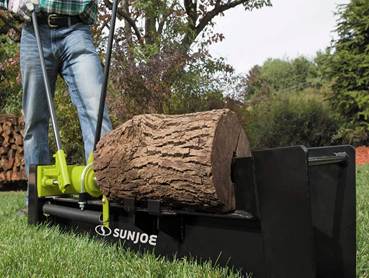
Manual log splitters are less complex machines that can be operated without a motor or engine. Instead, you use a hand-operated lever to split logs. They’re cost-effective alternatives to gas and electric splitters, but they have less power and require a lot more physical labor.
The simplest manual splitter is a maul and a wedge, but there are also hand-operated hydraulic splitters.
What Strength Log Splitter Do I Need?
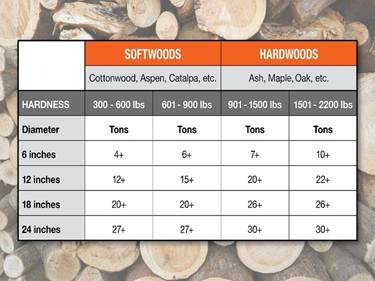
Log splitters exert varying amounts of power, called tonnage, to split wood with ease. The higher the tonnage, the more powerful the machine. Some types of wood require more tonnage to split them quickly, so consider the wood you plan to cut when choosing the best wood splitter for your needs. The size, dryness, age and hardness/type of wood all affect how much tonnage will be needed.
Generally, softwoods require less tonnage than hardwoods. More tonnage is needed for hardwood, large diameters, knotty or irregular pieces, and wetter or greener logs. If you know the hardness of the wood, using the Janka Hardness Scale, use the chart in this section to estimate the tonnage you’ll need. It’s usually better to have more power than you need. A good rule of thumb for choosing the best wood splitter is that most projects do well with 25 tons of power.
Tips:
- Let your logs age and dry out to make them easier to cut.
- Green logs, or freshly cut logs, are greenish or yellowish in color. They have a high moisture content.
- Dry wood will be a duller color, and it will be brown or gray.
- Aged wood is also called seasoned.
- Note that not all seasoned wood is dry. It may be wet due to rain or other conditions.
Best Log Splitter Features to Consider
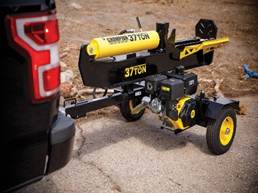
Log splitters have a variety of features that can make a certain style more desirable. Consider the following for your wood splitting needs:
- Log capacity
- Cycle time
- Engine/motor type
- Size and weight
- Construction and durability
- Safety features
- Special styles like towable log splitters
Log Splitter Safety & Maintenance
Even the best wood splitter can be dangerous, so it’s critical that you wear protective gear.
- Include ear and eye protection, hard-topped shoes, work gloves and covered arms and legs.
- Carefully follow the manufacturer’s instructions for correctly operating your specific machine.
- Maintain your log splitter for longevity, effectiveness and safety. You’ll need to make sure the motor is serviced, fluid is changed, pieces of wood and debris are cleared out, and that all mechanisms are working efficiently.
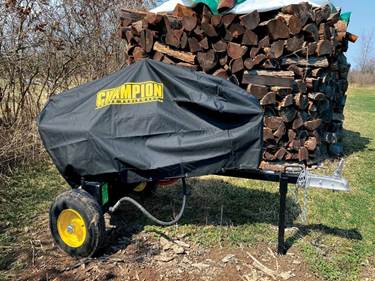
- Store your machine properly, covering it from the elements if it’s stored outside. The operation manual should give detailed instructions for storing, maintaining, servicing and cleaning your machine.
Log splitting is an essential step for preparing firewood, and a quality log splitter will make this task easier and more efficient. Once you’re ready, shopping is straightforward with The Home Depot. After you’ve made your choice, we can even deliver it right to your front door.